

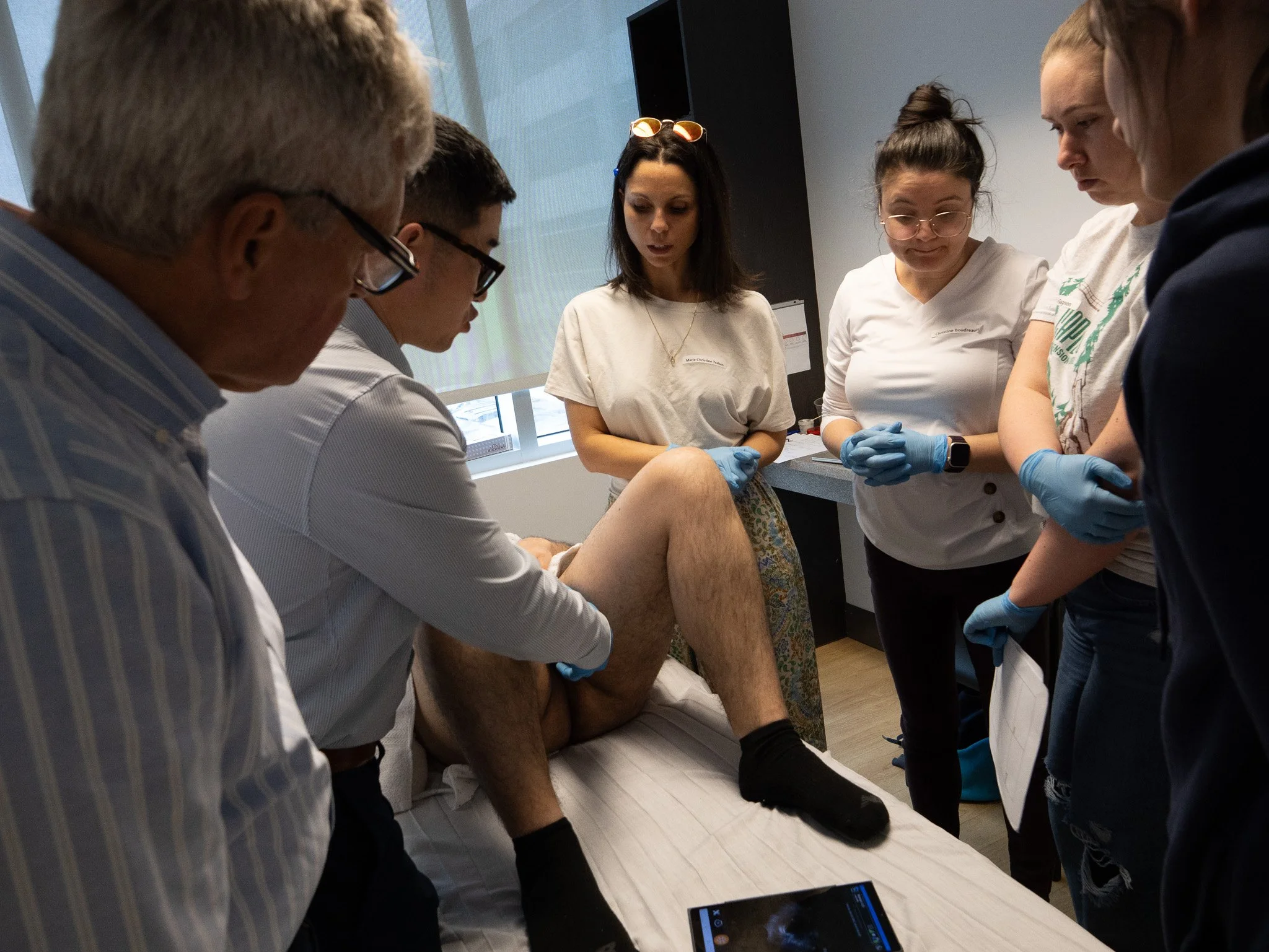
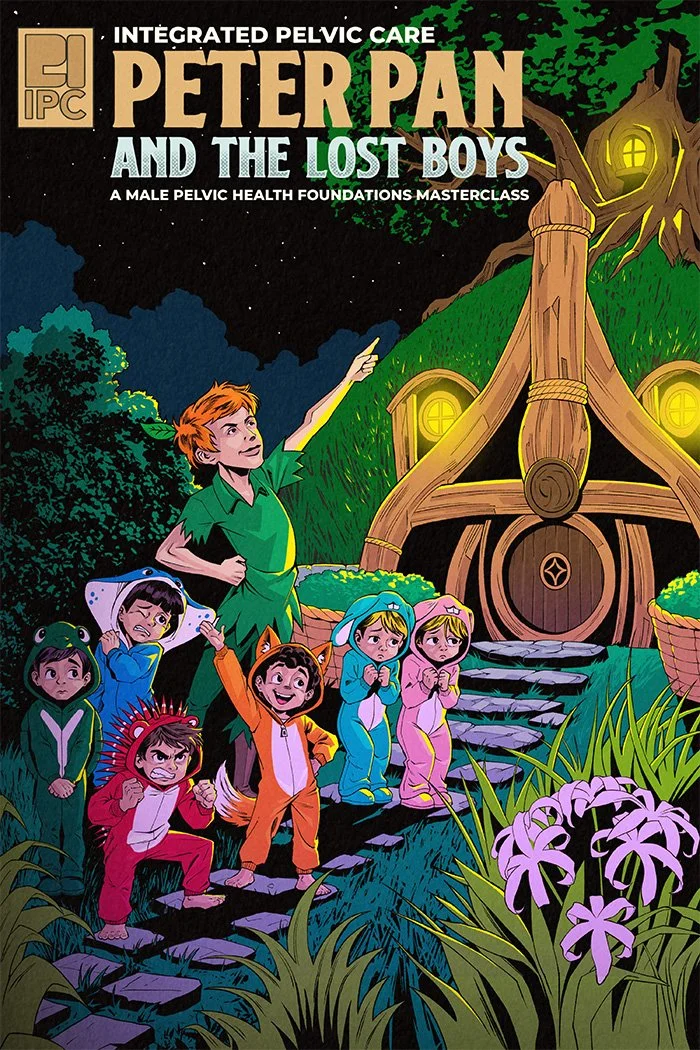
Peter Pan and the Lost Boys
A Male Pelvic Health Foundation Masterclass.
Assess and treat the full scope of male pelvic health with clinical clarity, not guesswork.
The foundation course for clinicians ready to treat men with confidence.
You’ll Walk Away Ready to Treat Men...
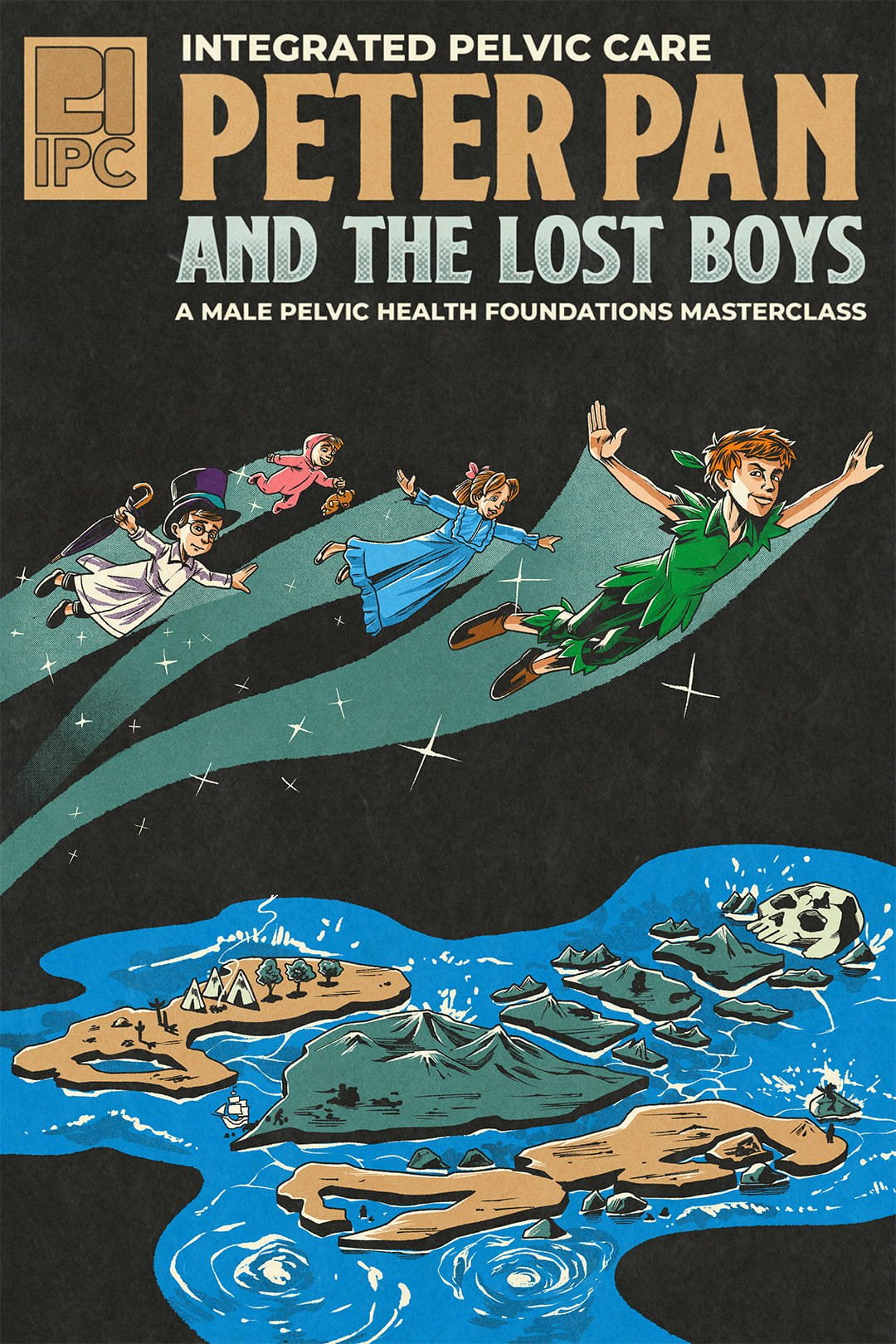
Get a clear, practical foundation in male pelvic health. You’ll build the core skills to assess, reason, and treat men with confidence: functional anatomy, pelvic floor assessment, treatment planning, red flag screening, and the communication skills for sensitive conversations. It covers the men you already see, across pain, urinary, bowel, sexual, and post-surgical concerns.
✅Pelvic pain and post-surgical recovery
✅Urinary urgency, frequency, and leakage
✅Bowel and voiding dysfunction
✅Sexual concerns and genital pain
Earn 20 CEUs
20 hours where we go over real cases, real tools, and a course that’s genuinely practical to take.
In other states, many boards accept CEUs through reciprocity or self-submission. Check with your licensing board to confirm.
This course content is not intended for use by any participants outside the scope of their license or regulation.
What Makes This Course Different?
✅Three original frameworks: the Nine Triangles, the Lost Boys, and PELVIS competency program
✅Tools to assess pelvic floor tone, strength, and coordination
✅Body charts, bladder & bowel diaries used for case-based reasoning
✅Practice with real male models (no awkward peer work)
✅Know when to strengthen, when to down-train, and when to refer
Practical Tools You Won’t Find Anywhere Else
The Nine Triangles of Male Pelvic Anatomy
Complex three-dimensional anatomy, redrawn as nine clear two-dimensional regions. A navigation tool to guide palpation, map symptoms, and document findings, so you always know where you are and what sits beneath your hands.
The Lost Boys Pelvic Floor Patterns
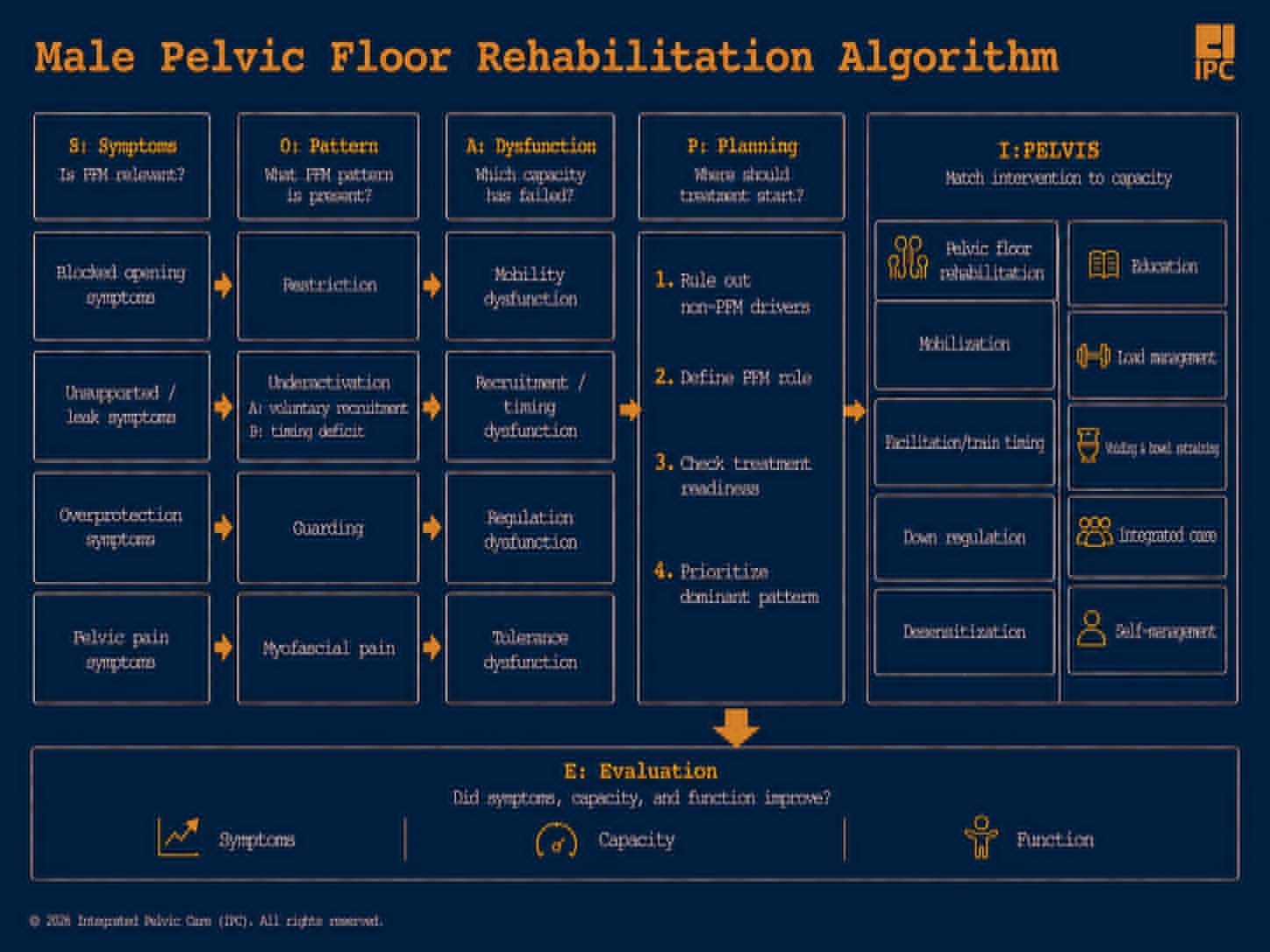
Retire the "weak versus tight" binary. Four recognizable presentations, Restriction, Under-activation, Guarding, and Myofascial Pain, that connect directly to your patient's symptoms and point you toward the right treatment.
The PELVIS Competence Program
A six-pillar treatment-planning system that turns "where do I even start" into a repeatable process: rehab skills, education, load management, voiding retraining, integrated care, and self-management.
Bad OMEN and Good OMEN Screening Pathways
A structured way to catch red flags and decide, with confidence, when to treat, when to pause, and when to refer.
You Know the Anatomy. Your Fingers Still Hesitate.
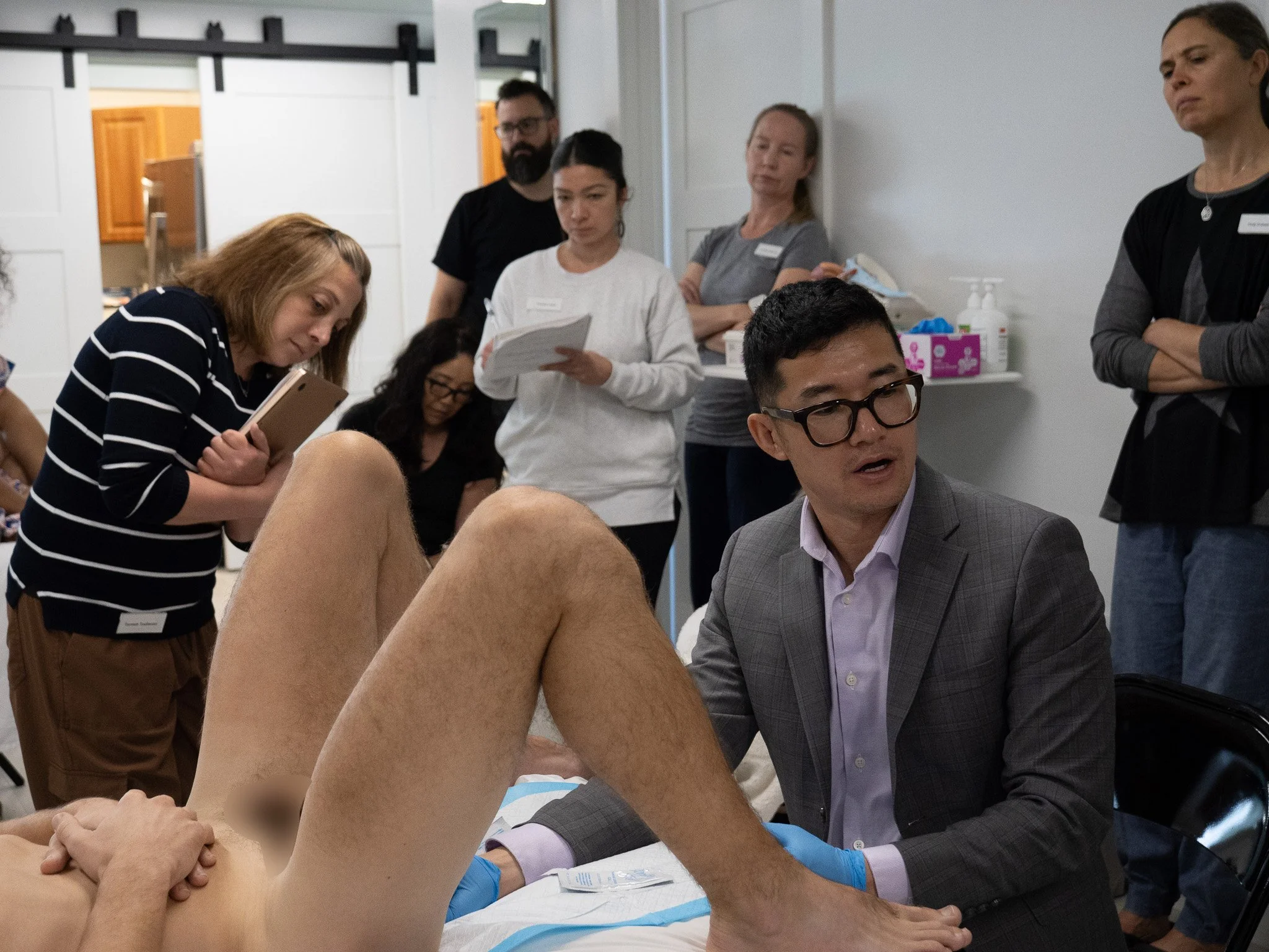
Here's what we hear constantly: "I know the anatomy, I just don't trust my hands on a real patient." It makes sense. Most clinicians have never palpated these structures on real tissue with an expert there to confirm they're on them. That's what this lab is for:
🟢 Map the male pelvis with the Nine Triangles, turning complex anatomy into clear clinical regions
🟢 Practice external and internal palpation on real male models
🟢 Link what you feel to symptoms, function, and your treatment plan
No pretending your lab partner is a male patient. Practice on real ‘patients’.
Course outline
A male pelvic health foundation masterclass. Online pre-course (4h) covering key research and ICS terminology, plus a 2-day live course (16h).
Day 1: 8:00am-5:30pm
Chapter 1: The Hidden Need in Men’s Pelvic Health
The scale and impact of male pelvic health concerns
Why men under-seek care, and how to change that
Your scope, responsibilities, and referral pathways

Chapter 2: Safe, Trauma-Informed Setup
Evidence foundations and clinical resources
Consent, privacy, documentation, and trauma-informed care
Legal, ethical, and scope-of-practice basics

Chapter 3: The Nine Triangles of Male Pelvic Anatomy
Turn complex anatomy into nine clear clinical regions
Key muscular, fascial, neurovascular, and urogenital landmarks
How the model guides palpation, reasoning, and documentation

Chapter 4: Male Anatomy Palpation Lab
Surface anatomy and external palpation landmarks
Internal assessment where appropriate to scope and consent
Consent, draping, safety, and professional handling

Chapter 5: Anatomy in Clinical Decisions
Apply the Nine Triangles across pain, urinary, bowel, sexual, and post-surgical cases
Use anatomy to set assessment priorities
Document anatomical findings clearly

Day 2: 8:00am-5:30pm
Chapter 6: Sensitive, Precise History Taking
Ask about urinary, bowel, sexual, pain, and surgical history with confidence
Gauge symptom irritability, severity, and patient goals
Use language that reduces shame and builds trust

Chapter 7: Assessment and the Lost Boys Patterns
Assess tone, strength, endurance, coordination, and awareness
Recognize four patterns: restriction, under-activation, guarding, and myofascial pain
Link patterns to pain, urgency, leakage, and post-surgical symptoms

Chapter 8: Treatment Planning With PELVIS
Build foundation-level plans with the six PELVIS pillars
Pelvic floor rehab, load management, voiding retraining, and self-management
Patient education that builds confidence and reduces fear

Chapter 9: Complex Presentations and Red Flags
Make sense of mixed urinary, bowel, sexual, and pain symptoms
Screen for red flags that need referral or escalation
Use case-based reasoning to prioritize care

Chapter 10: Trust, Confidence, and Sensitive Conversations
Build therapeutic trust and your own professional confidence
Navigate masculinity, vulnerability, and help-seeking
Talk about sex, continence, and taboo topics with clear, respectful language

Chapter 11: Putting It Together
Consolidate the Nine Triangles, Lost Boys, and PELVIS
Integrate learning through clinical reasoning
Build your plan for safe, confident, ongoing practice
Course Details (registration)
Date: September 26-27 2026
Location: Vactive Clinic, 4660 Jean-Talon E Street, Saint-Léonard, QC H1S 1K2
Pricing: 1089$ 1289$ (early bird september)
+taxes (20 CEUs)
Your instructor.

Di (Woody) Wu
M.Sc PT, MMed, MBBS, Cert. MDT
Di Wu trained as a medical doctor and completed his residency in Beijing. He practiced as an Orthopedic Surgeon for several years, before establishing himself in Montreal, Canada. In Montreal, he attended physical therapy school at McGill university where he was the first man to enrol in the pelvic floor course. He adapted his learning from that course, which solely focused on women, to be able to effectively treat men.
Over the past decade, drawing inspiration from his background as a doctor and as a PT, he has built a framework to help him get repeatable and reliable treatment results for treating male pelvic pain. After almost a decade of refinement and conducting studies to corroborate the findings, Di has solidified the framework. He now shares his knowledge and passion about male pelvic pain nationally and internationally with PTs who are interested in treating male pelvic pain.
Frequently asked questions
-
All courses have been built to bring you maximal value and to give you the tried and tested assessments and treatments that yield results in-clinic. We’ve taken theoretical courses before and it was hard to figure out how to apply what was learned in practice, so we understand where you’re coming from. Rest assured, we have packed the courses with applicable techniques and treatments. The best part is that IPC is built on the latest evidence as we do research with academic partners once patterns are discovered in-clinic.
-
No, men and women differ a lot when it comes to pelvic issues. While we believe that there is knowledge that is common and useful for treating both men and women, we believe that it’s like learning how to play violin versus how to play piano.
There are commonalities such as how to read music sheet, there are many fundamental differences between playing both instrument. At IPC we pride ourselves in providing the most comprehensive courses so you can successfully treat men even you haven’t had any experience before.
-
Yes, upon successful completion of a course, you will receive a certification acknowledging your achievement.
-
Our Wizard of LUTS Courses and Four Horsemen of Male Pelvic Pain Courses are CEU approved in several States. Our main CEU application is submitted to the physical therapy board of some States. These States may vary year by year so please refer to the sign-up page of the course to validate that your State is listed. Many States offer reciprocal acceptance of CEUs as long as the course is approved by a State.
If your State is not listed, we’re happy to provide you with the necessary information if you wish to apply for CEUs as an individual applicant.
For online courses, we’re not applying for continuing education units under any States. We’re happy to provide you with the necessary information if you wish to submit a CEU application as an individual applicant. -
We have three flagship courses. One that is focused on treating pain: The Four Horsemen of Male Pelvic Pain. One that is focused on treating LUTS: The Wizard of LUTS. And the other one is focused on treating erectile dysfunction: “Rhythms of ED”.
Our courses are Masterclasses that provide you with all the necessary information and practical tools to succeed in helping your patients who are suffering from pelvic pain or erectile dysfunction.
As we share in our courses, treating pain is drastically different from treating erectile dysfunction, therefore which course you wish to start with will depend on your interest and goals as a clinician.
-
Currently our flagship Four Horsemen of Male Pelvic Pain is an in-person course with some online pre-work to be done prior to attending the course. Same thing for our Wizard of LUTS.
Our ED courses are fully online and self-paced.
-
We welcome any health professionals has male pelvic health within their scope of practice. As always, it is the responsibility of a course participant to guarantee that they are legally able to conduct the techniques taught in an IPC course prior to participating.
IPC courses are mostly attended by physical therapists. We have had physical therapist assistants, occupational therapists, physicians (urologist), nurses, chiropractors attend our courses.
-
If you signed up for the course recently and there's more than 30 days until the start date, you have the flexibility to cancel your registration. A 10% administrative fee will apply for the refund option, or you can switch to another course with no extra charge.
If the course is just around the corner (less than 30 days away), a refund is no longer an option. However, you still have the freedom to seamlessly transfer to another course or convert your registration fees into credit for a future course, all without incurring any additional charges.